

Design of household photovoltaic energy storage system scheme
Author:MUJICA TECH
Click:
Time:2025-07-24 15:26:07
The household photovoltaic energy storage system mainly consists of photovoltaic modules, energy storage batteries, energy storage inverters, metering equipment and monitoring and management systems, etc. It aims to achieve self-sufficiency in household energy, energy conservation and emission reduction, as well as improve power supply reliability. The configuration of a household photovoltaic energy storage system is a comprehensive process that requires consideration of multiple factors to ensure the efficient and stable operation of the system.
1. System Overview:
Before starting the system, the DC insulation resistance between the input end of the photovoltaic array and the ground should be measured. If the impedance is less than U... /30mA(U… If it is the maximum output voltage of the photovoltaic array, then the main application functions of the household photovoltaic energy storage system include self-generation and self-consumption of electricity, peak-valley electricity price arbitrage, peak shaving and valley filling, as well as emergency backup power, etc.
The configuration of household photovoltaic energy storage systems needs to be customized based on the specific requirements and actual situations of different users. It is necessary to understand the electricity demand of users, collect their electricity consumption power and the distribution of electricity consumption, design the configuration of photovoltaic systems, design the configuration of energy storage systems, and design the supporting systems. In addition, it is necessary to formulate construction and installation plans as well as later operation and maintenance and optimization measures.
2. Demand Analysis and Planning:
For the design of a household photovoltaic energy storage system, it is first necessary to conduct a detailed analysis of the household's energy demands, including statistics on the power of each electrical device, daily electricity consumption, and the distribution of electricity consumption. Understand the household's power supply situation and electricity price policies in order to better plan the project. The power meter of the electrical equipment in this design case is as follows:
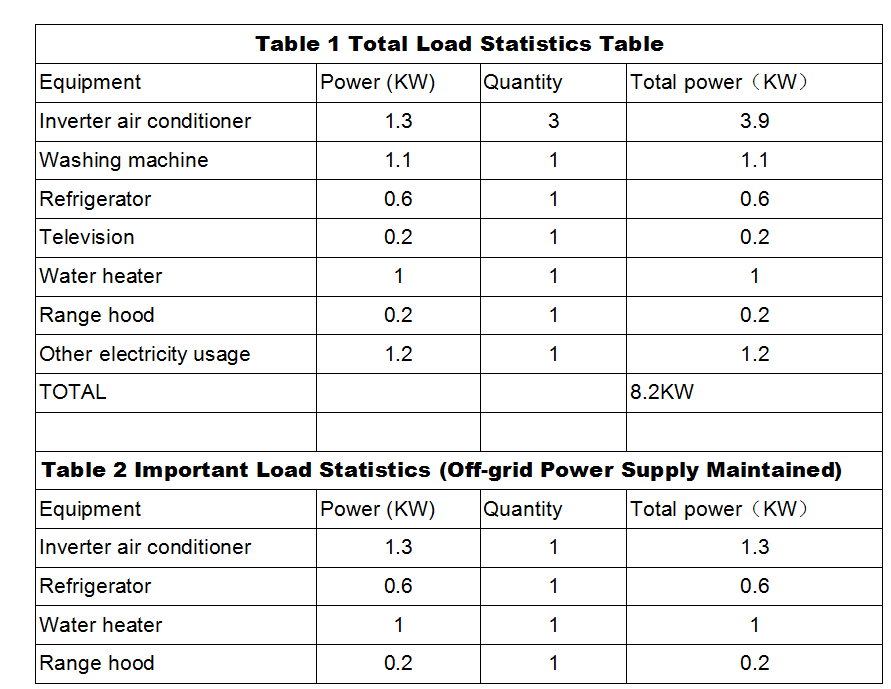
According to the provided power consumption situation, the cumulative power consumption load of this user is 8.2kW, among which the power of important loads is approximately 3.6kW. The average daytime electricity consumption is approximately 10 kilowatt-hours, and the average nighttime electricity consumption is about 20 kilowatt-hours. This plan is to install a household photovoltaic and energy storage grid-connected and off-grid system. During the day, the photovoltaic system generates electricity to supply the load, and the remaining photovoltaic electricity is stored in the energy storage battery. When there is no photovoltaic power generation or at night, the battery discharges to supply the load. When the photovoltaic power generation is insufficient and cannot meet the load demand, the grid will supplement it. When the power supply from the grid is unstable or there is a power outage, the discharge of the energy storage system can meet the off-grid power consumption of some important loads.
3. System Configuration and Selection
Based on the electricity consumption situation, the total power of the user is 8.2kW, with a daily electricity consumption of approximately 30 kilowatt-hours. It is recommended that the photovoltaic installation capacity be 12kW, with an average daily power generation of about 36 kilowatt-hours, which can meet the overall electricity demand of the user. The electricity consumption of users at night is approximately 20 kilowatt-hours. Considering the fluctuation of electricity consumption during the day and the demand for off-grid backup power, some reserves need to be made. The energy storage battery is configured with 25kWh. Under full capacity, it can meet the operation of a 3.6kW load for about 7 hours when off-grid. Note: The above photovoltaic capacity is required for calculation. If the actual installed capacity of photovoltaic is restricted by on-site factors, the capacity can be configured according to the actual situation.
4. Selection of photovoltaic modules
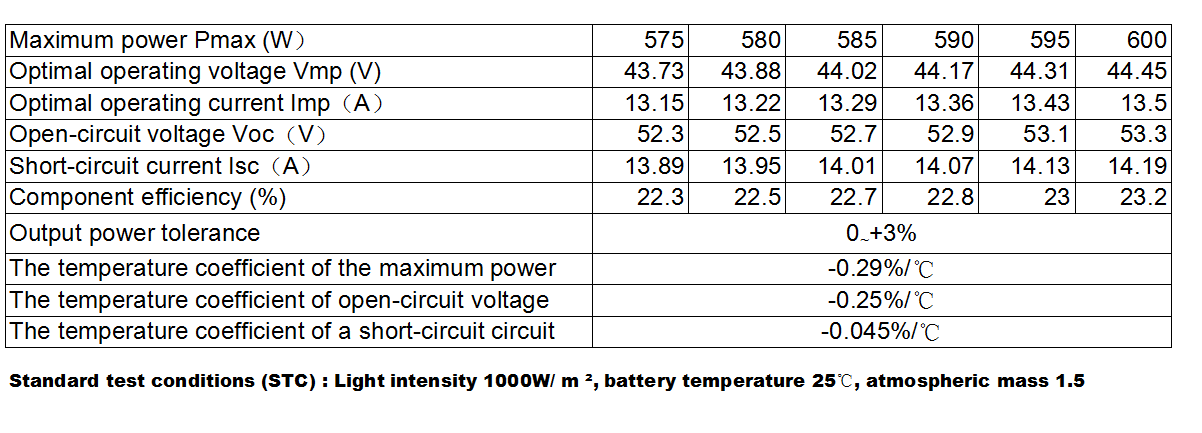
Select the appropriate type of photovoltaic modules (such as monocrystalline silicon, polycrystalline silicon or thin-film modules), taking into account factors such as efficiency, lifespan and cost. Ensure that the photovoltaic modules can adapt to the local climatic and lighting conditions; This time, 21 monocrystalline 580Wp modules are adopted, with an installed capacity of 12.18kWp.
5.Energy storage system configuration
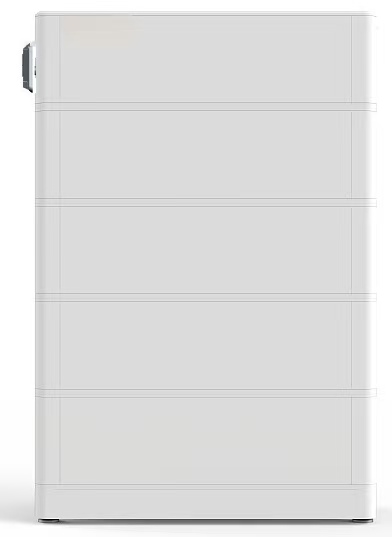
Determine the type and capacity of the energy storage battery. Commonly used battery types include lead-acid batteries, lithium-ion batteries and lithium iron phosphate batteries, etc. Considering factors such as battery life, cost, safety and charge-discharge efficiency, lithium iron phosphate batteries are adopted this time in a stacked solution, consisting of battery management system modules and battery modules. The integration is more flexible and reliable. Each battery module has a capacity of 2.56kWh and a protection level of IP65, making it suitable for various environmental scenarios. The designed capacity of this battery is 25.6kWh and it is composed of 10 battery modules stacked together.
6. Selection of inverters
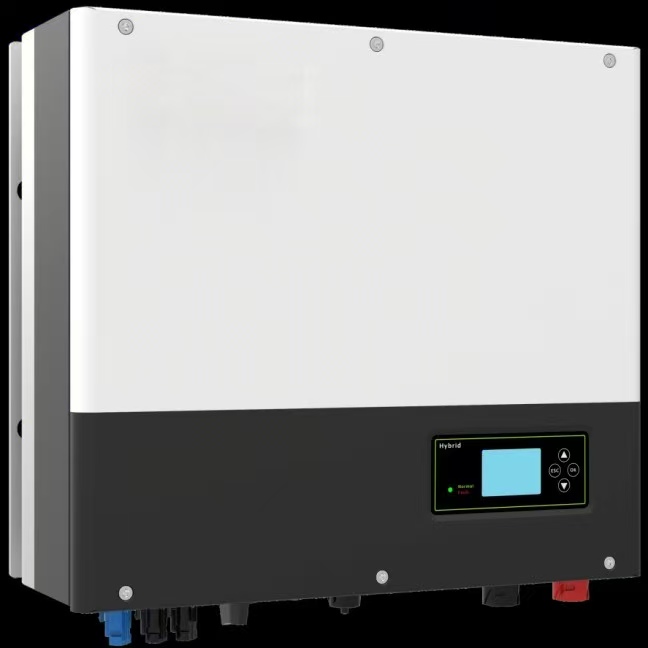
The inverter adopts a DC coupling solution product. The photovoltaic inverter and the bidirectional converter are integrated into a photovoltaic storage integrated machine and directly connected to photovoltaic modules, power grids, batteries, etc., forming an integrated whole. This results in a higher degree of integration and reduces the failure rate of system integration. When the photovoltaic system is in operation, the electricity generated can be charged to the battery through the photovoltaic storage integrated machine, or it can supply power to the load or be input into the power grid. Based on the cumulative power consumption of 8.2kW for this user, the power of important loads is approximately 3.6kW, and the photovoltaic power is 12.18kWp. A 10kW photovoltaic storage and off-grid integrated unit is adopted, with a maximum photovoltaic input power of 15kW and an AC off-grid output of 10kW, meeting the requirements for photovoltaic and load access. Protection grade P65, equipped with on-grid and off-grid switching function, with a switching time of less than 10ms. Note: For pure off-grid systems, the power selection of the inverter should take into account the load start-up power to avoid overload.
7. System Design and Integration
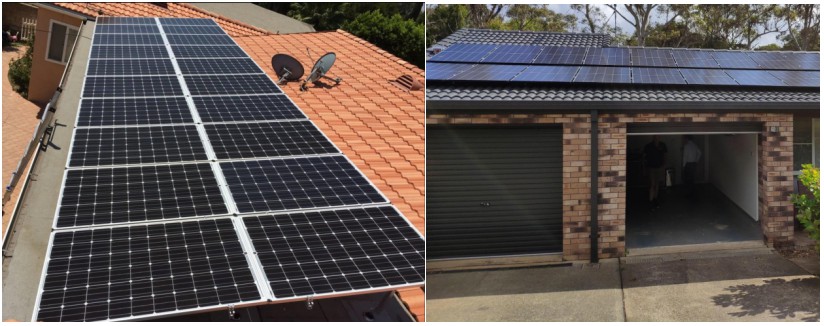
1. Photovoltaic system design: Design the layout and arrangement of photovoltaic modules to ensure maximum light reception. Determine the structure and installation details of the support system, taking into account the roof load-bearing capacity and safety. For household systems, photovoltaic systems can be laid flat or installed with raised brackets according to the type of roof. A total of 21 580Wp photovoltaic modules are connected to the two-string interface of the inverter in a two-string solution.
8. Energy storage System design
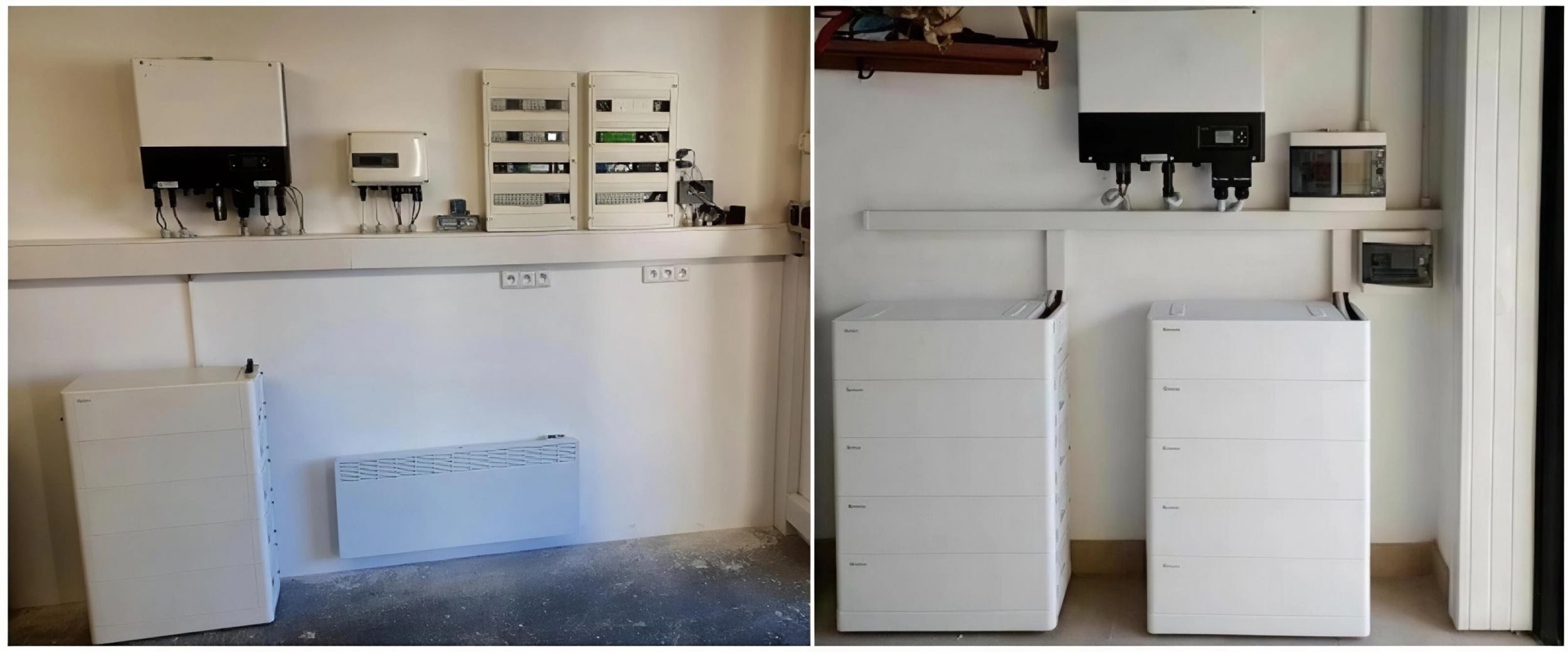
Design the installation position and connection method of the energy storage battery to ensure the safe and efficient operation of the battery pack. Configure a battery management system for monitoring and managing the status of batteries. This energy storage system consists of one 10kW energy storage inverter and one 25.6kWh energy storage battery system. The energy storage inverter is wall-mounted, and the energy storage battery system is composed of a battery management system module and battery modules, which are stacked and installed on the ground. It has an IP65 protection rating and supports both indoor and outdoor installation. The power lines of each battery module are connected in series to the energy storage inverter and simultaneously to the communication lines of the battery management system to complete the power and communication connections.
10. System integration
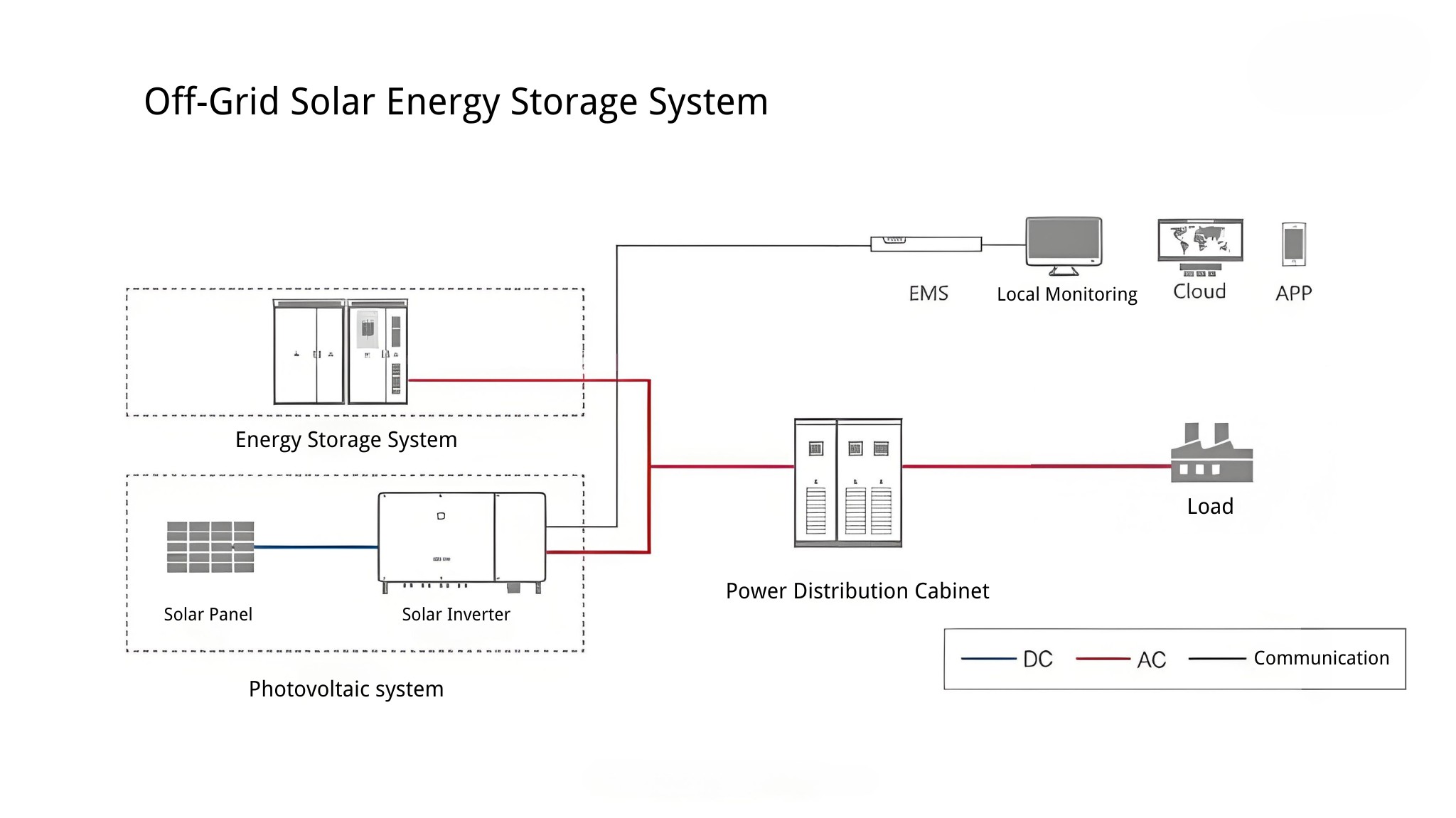
Integrate the photovoltaic system, energy storage system, energy storage inverter and other components organically to form a complete solution. Consider the compatibility of each part, communication protocols, and overall design optimization. This photovoltaic and energy storage system is equipped with a 12.18kWp photovoltaic system and a 10kW/25.6kWh energy storage system. The system integration diagram is as follows:
11. Construction and Installation
On-site investigation and preparation
Conduct a detailed on-site investigation before installation to confirm the actual condition of the roof and the installation conditions. Formulate detailed construction plans and safety measures to ensure safety during the construction process.
Equipment installation and commissioning: Install equipment in accordance with the construction plan, including photovoltaic modules, brackets, inverters, batteries, etc. Ensure that all equipment is correctly installed and connected, and conduct initial debugging.
System acceptance and operation: Relevant professionals conduct system acceptance to confirm that the system meets the design requirements and safety standards. After the acceptance is qualified, the acceptance report will be signed and the system will be officially put into operation.
12. Post-operation maintenance and optimization
Regular inspection and maintenance: Regularly inspect photovoltaic modules, inverters, batteries, etc., to ensure their normal operation. The inspection contents include appearance inspection, electrical connection inspection, system operation status inspection, etc.
Cleaning and maintenance: Regularly clean the photovoltaic modules to ensure that their surfaces are free of dust, dirt, etc., and maintain a high photoelectric conversion efficiency.
Fault monitoring optimization: Timely monitor the system's operational status, fault monitoring, and operational data monitoring through cloud-based software. Based on the actual operation conditions, optimize and adjust the system to enhance its overall performance and efficiency.
13. Summary
In conclusion, the design process of household photovoltaic energy storage projects involves multiple aspects such as requirement analysis, equipment selection, system design, construction and installation, and later operation and maintenance. Through scientific design and construction, it can be ensured that the project is implemented smoothly and the expected energy conservation, emission reduction and economic benefit goals are achieved. During the specific design process, detailed planning and adjustments still need to be made based on the actual situation of the family and local policy requirements.
 Website: www.mujicatech.com
 E-mail: sales@mujicatech.com
 Address: Room 730, Shenzhou Computer Building, JuLiFuRen Blvd, BanTian, Longgang District, Shenzhen City, Guangdong Province.
广东省深圳市龙岗区坂田街道居里夫人大道神舟电脑大厦730室




Follow Us
Copyright ©2025 SHENZHEN MUJICA TECHNOLOGY CO.LTDPowered by: WZTX | Login | website map


